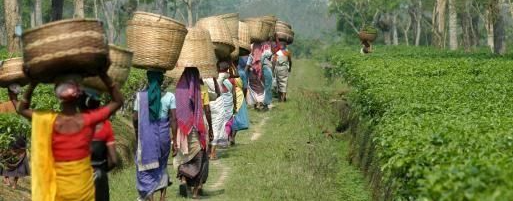
Tea (Camellia sinensis) is one of the world’s most widely consumed beverages and holds deep agricultural and cultural significance in India. As one of the largest global producers and consumers, India’s major tea-growing regions—Assam, Darjeeling, and the Nilgiris—are internationally renowned for their distinctive flavors and Geographical Indication status. Beyond trade, tea is embedded in everyday Indian life as a symbol of hospitality, social interaction, and identity.
Tea cultivation in India began in the early nineteenth century with the discovery of Camellia sinensis var. assamica in Assam and the subsequent establishment of plantations under British colonial rule. Over time, tea evolved from a colonial commodity into a national beverage, shaping agrarian systems, labor practices, and regional economies. Today, it is consumed across all social strata, from household kitchens to roadside chai stalls that function as informal community spaces.
Culturally, Indian tea traditions are highly diverse. Assam teas are known for their strength, Darjeeling for their delicacy, Nilgiris for their aroma, and Kashmir for spiced green kahwa. Masala chai, infused with spices such as ginger and cardamom, reflects the integration of tea with indigenous health practices. Economically, tea remains vital, supported by institutions like the Tea Board of India and research centers advancing sustainability and quality.
In contemporary India, tea continues to adapt through artisanal blends, cold brews, and wellness-oriented infusions, while retaining its traditional forms. More than a beverage, tea represents continuity, inclusivity, and cultural heritage, linking India’s past with its evolving present.
References
-
Baruah, S. (2011). A History of Tea in India: Colonialism and Beyond. Assam University Press.
-
Tea Board of India. (2023). Annual Tea Statistics. Government of India.
-
Tocklai Tea Research Institute. (2022). Research and Innovation in Indian Tea.
-
Sharma, R., & Mahanta, P. (2019). Tea and Society in India: A Socio-Cultural Perspective. Journal of Cultural Studies, 14(2), 45–62.
-
Author: Dr. Kapil Dev Sindhu, Director, Cirrus Tea Hillbar